|

|
Tanzania
Population:
33 million
|
Language:
Swahili, English, tribal languages
Peoples:
160 indigenous ethnic groups; widespread use of
Swahili has lessened tribal divisions
Predominant Religion: Religious freedom for worship and
witness. Christians 51% (includes Roman Catholics), Muslims
35%, Traditional religions 13.2%
Government:
Multi-party democracy
Economy:
Agricultural subsistence economy
Capital:
Dar-es-Salaam 3 million, Dodoma (Capitol Designate)
BRIEF
HISTORY OF TANZANIA
Politics
- Tanganyika gained independence from Britain in 1961; Zanzibar in 1963. The two
countries united as a one-party federal socialist republic in 1964, though Zanzibar
has retained a considerable degree of autonomy. The one-party system ended in
1992 and a multi-party democracy was instituted. For 35 years Tanzania has been
an 'island of peace' in a troubled region. There are recurring differences between
the mainland and Zanzibar which threaten the bonds between them.
Economy
- Agricultural subsistence economy yet with much potential for development. The
disastrous experimentation with socialism after independence led to nationalization
of many businesses and collectivization of rural communities. The results were
a bloated bureaucracy, deterioration of industry and the infrastructure, a serious
reduction in living standards and drying up of international investment. During
the 1990's the economy opened up resulting in steady improvement, but the reliance
on foreign aid hampers entrepreneurial initiative.
Religion
- There is religious freedom and equal rights and opportunities for both Muslims
and Christians to worship and propagate their faiths. (Operation World, 21st Century
Edition, WEC International)
PRAY
FOR A TRIBE
Would you like
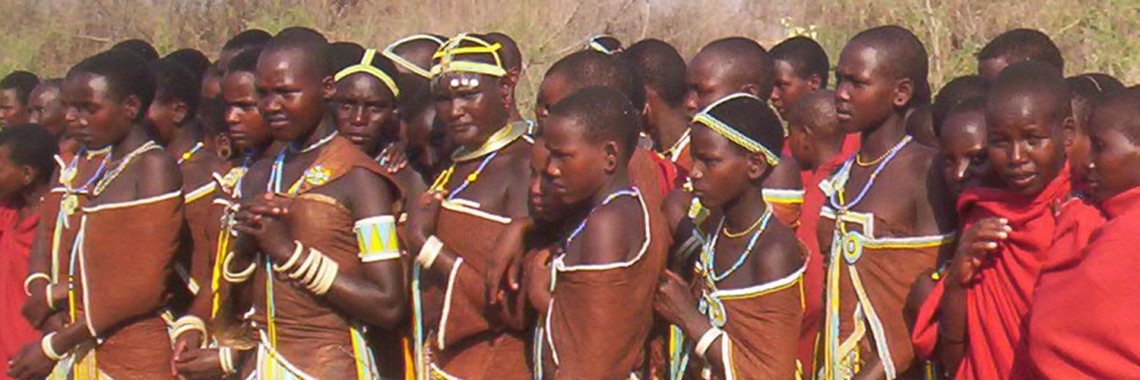
to have a part in getting the Gospel to a completely unreached people in the interior
of the country of Tanzania? There are about 200,000 Datooga people, none of whom
have heard the Gospel of Jesus Christ and who do not have the Bible in their own
language. They are resistant to cultural change, including belief in Christianity,
maintaining a strong adherence to traditional animistic beliefs and practices.
Since most Datooga do not speak Kiswahili, the national language of Tanzania,
and very few are literate, communication must be in their own language. Like animists
the world over, the good news of Jesus Christ is very relevant to their needs.
Besides the Datooga
there are at least 130 different languages in Tanzania, many of them unwritten.
GFF has also targeted the 275,000 Walangi, 30,000 Wasi and 375,000 Iraqw people
groups.
GFF'S
MINISTRY IN TANZANIA
GFF's first missionaries
entered Tanzania in 1949. The Lord blessed the ministry and by 1973 seven churches
and a Bible institute had been established. However, in 1976 the borders were
closed and missionaries were prohibited from carrying out their ministries.
In 1986 Bruce and
Ruth Busch (knowing the borders had been reopened) felt God leading them to minister
in Tanzania. In 1989 they were allowed to reenter the country and the Bible Institute
was restarted. By 1998 22 churches in the northern and western areas had been
started and a survey had been done establishing the fact that the Datooga tribe
was unreached. The leadership of the Mission felt led of the Lord to focus efforts
on the Datooga. Accordingly, we are praying earnestly that the Lord of the harvest
will send us men and women who have a passion to reach the lost with the Gospel
and a conviction that the Lord wants them to go to the Datooga or some other unreached
people group in Tanzania.
GFF'S
COMMITMENT
GFF will consider
any creative means in order to initiate church planting movements among any unreached
people group (UPG). We offer career, short term and summer opportunities to be
directly involved in reaching UPGs. We are open to going to any UPG if there are
no fundamental ministries trying to reach them and there is a team of people who
feel God leading them to go with GFF to get the job done.
CURRENT
NEEDS
1. Ten Church Planters
2. Bible Institute
teachers
3. One builder
(short term)
G.F.F. is looking
for men and women who are called of God to serve on the mission field. G.F.F.
has competent, experienced leadership and is willing to assist new missionaries
in becoming successful missionaries for God's glory.
|